
TL;DR Summary:
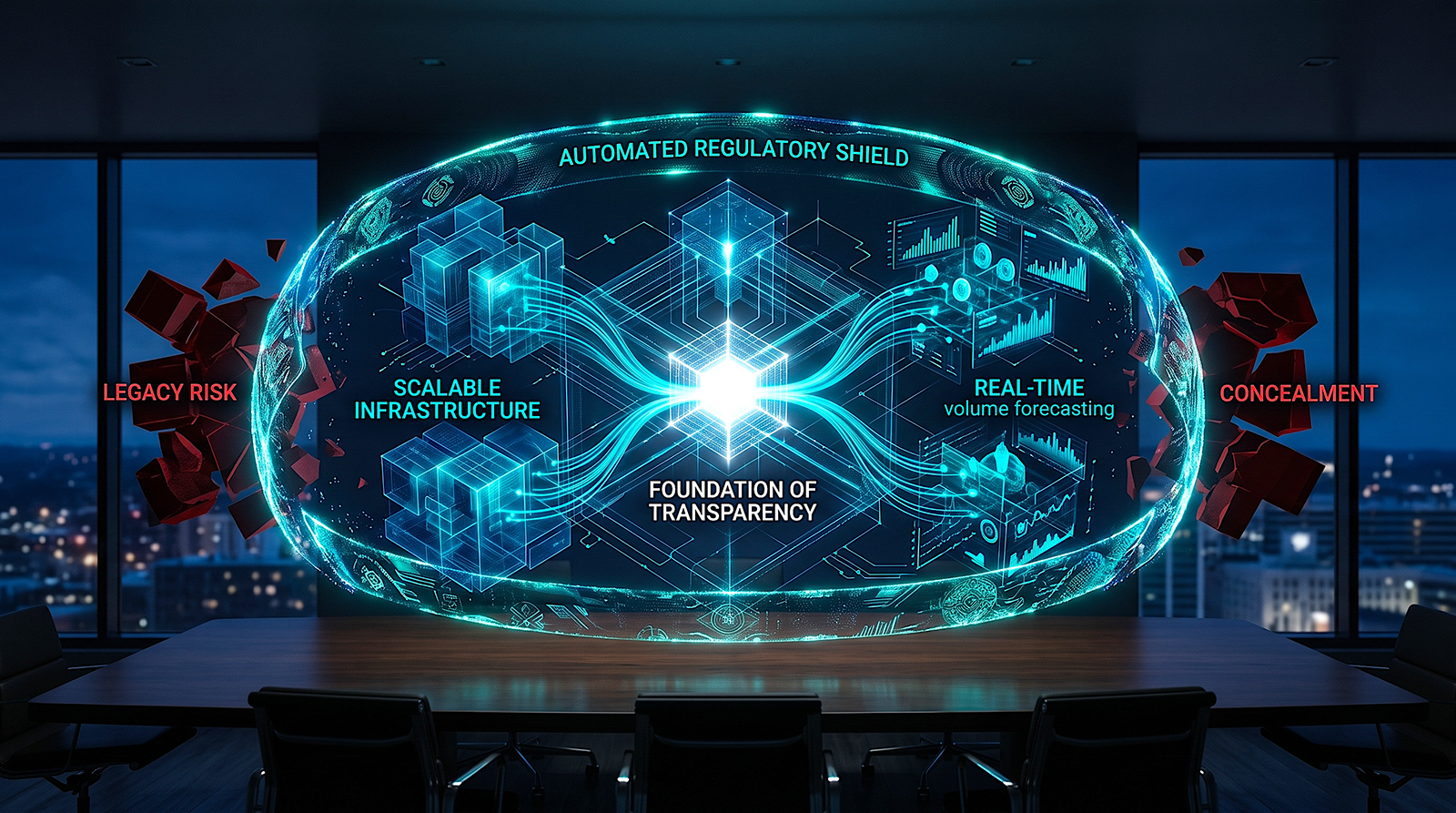
A recent $120 million fraud judgment in the payment sector details intentional concealment and misrepresentation of payment volume—stark evidence of the systemic risk that occurs when business metrics are opaque. Cleveland Brown, CEO of Payscout, argues that for businesses looking to scale borderlessly, payments cannot remain a backend clerical function. To avoid the high stakes of inaccurate forecasting and misaligned partnerships, organizations must shift from legacy thinking to Payment Strategy by Architecture. This requires a foundation built on accurate, induced-free data, infrastructure that scales beyond legacy bottlenecks, and a “Compliance Shield” that turns regulatory mandates into an operational advantage.
I didn’t start my career in technology or finance. I started it, studying philosophy at UCLA. Philosophy taught me that to solve a complex problem, you cannot simply fix the symptoms; you must examine the foundational assumptions that govern the entire system.
In global commerce today, those assumptions are broken.
A recent report by Cooley detailing a $120 million fraud judgment serves as a profound industry example. While we will not comment on the specific organizations, the underlying systemic failure exposed by the case demands a philosophical shift in how businesses approach global commerce. The core issue: a fundamental dispute over payment volume projections and systemic concealment that induced a merger. A jury found multiple frauds were committed.
This conflict isn’t just about bad actors; it is about an archaic, opaque architecture that incentivizes misrepresentation over transactional certainty. In global commerce, “legacy thinking” is a vulnerability. True growth demands a transparent payment partner, scalable infrastructure, and a compliant environment where great decisions get made autonomously.
Accurate Forecasting: Data Architecture vs. Induced Illusions
The Cooley article detailed a situation where payment volume projections were deliberately inflated. In the legacy world, businesses are often forced to use non-compliant “inductions” or manual spreadsheets to forecast future load. This is not growth; it is an illusion built on shaky data.
Accurate volume forecasting is not just “reporting.” It is an architectural mandate. Our mission at Payscout is to build infrastructure that allows businesses to transact borderlessly, securely, and instantly. When we build that environment, we are proving that diverse leadership fosters more resilient and creative organizations. But creativity requires certainty. We cannot architect for high-performing corporate cultures if the foundation is flawed.
The right payment strategy demands accurate, direct-to-API reporting. This allows your scaling infrastructure—including specialized networks like UnionPay with instant settlement finality—to handle real load, not an induced prediction. You aren’t processing numbers; you are architecting a capital velocity engine.
Scalability by Design: Escaping the Friction of Legacy Rails
Businesses frequently fail when trying to scale because they are trying to force a 21st-century growth environment through 20th-century financial infrastructure. A scalable payment infrastructure is about eliminating the friction points that prevent global commerce from reaching its full potential.
The legacy approach forces transactions through slow correspondent banking networks, leading to opaque fees and settlement times of three to five business days. This friction is not an inevitable part of doing business; it is a bottleneck designed by legacy thinking. By contrast, a modern strategy relies on direct-to-card APIs that can scale autonomously with your business, bypassing correspondent bank intermediaries and accessing billions of global cardholders with millisecond-speed finality.
If you are not choosing a compliant, direct-to-API environment, you are choosing a system with an architectural vulnerability that will eventually create larger financial and operational risks. Scalability is about architecting finality.
Alignment Protocol: The Compliance Shield as Architectural Transparency
The Cooley case context is about misalignment—one side concealing risk while the other unknowingly carries it. Transparency is not a marketing value we “add” to Payscout; it is a system protocol derived directly from our focus on compliance.
I have said many times that a CEO’s job is not to make decisions; a CEO’s job is to build a culture and an environment where great decisions get made autonomously. In global payments, that environment is created by a compliant infrastructure. Compliance is not a feature; it is the very architecture of the system. We don’t “add transparency.” Our system is designed for compliance, which creates transparency.
By embedding dynamic risk scoring, automated behavioral telemetry, and real-time KYC/AML/OFAC screening directly into the transaction path, we act as an automated regulatory background shield. This aligns us perfectly with our partners, preventing concealment and identifying risks before they become operation or financial liabilities.
Conclusion: Architecting Certainty, not Processing Friction
The choice facing corporate leadership today is simple: cling to legacy architecture or architect for certainty. The former leads to opaque data, manual bottlenecks, and a vulnerability to misrepresentation. The latter provides a clear path to borderless commerce.
By partnering with Payscout, you aren’t choosing a processor. You are choosing to architect a culture of transaction certainty, secure global expansion, and compliant, borderless growth. Stop looking for commentary and start looking for architecture.
About the Author
Cleveland Brown is the Co-founder and CEO of Payscout. Drawing on philosophical frameworks from UCLA, he has spent over 25 years architecting global payment systems and scaling high-performing corporate cultures. He is a pioneer in removing friction from global commerce, specializing in cross-border payment infrastructure, automated regulatory compliance shields, and the next generation of financial technology.